
Help us fight State Question 832!
Read SQ 832
State Question 832 threatens Oklahoma’s small businesses, low cost of living, and free economy by imposing a $15/hour minimum wage.
Potential Negative Impacts Cited by Opponents of SQ 832
Reduced demand for low‑skill and entry‑level jobs
Some economists argue that raising the minimum wage—especially to $15—can reduce employer demand for low‑skill labor. This may lead to fewer entry‑level opportunities for teens and new workers who rely on these jobs to gain basic skills.
Possible business closures or cutbacks
Opponents claim that higher mandated wages can strain small businesses with thin margins, potentially resulting in:
- Reduced hours
- Fewer employees
- Slower hiring
- In some cases, business closures
Higher prices for goods and services
Critics argue that businesses may pass increased labor costs on to consumers, raising prices for everyday items and services. This can disproportionately affect low‑income households.
Concerns about tying wages to a national inflation index
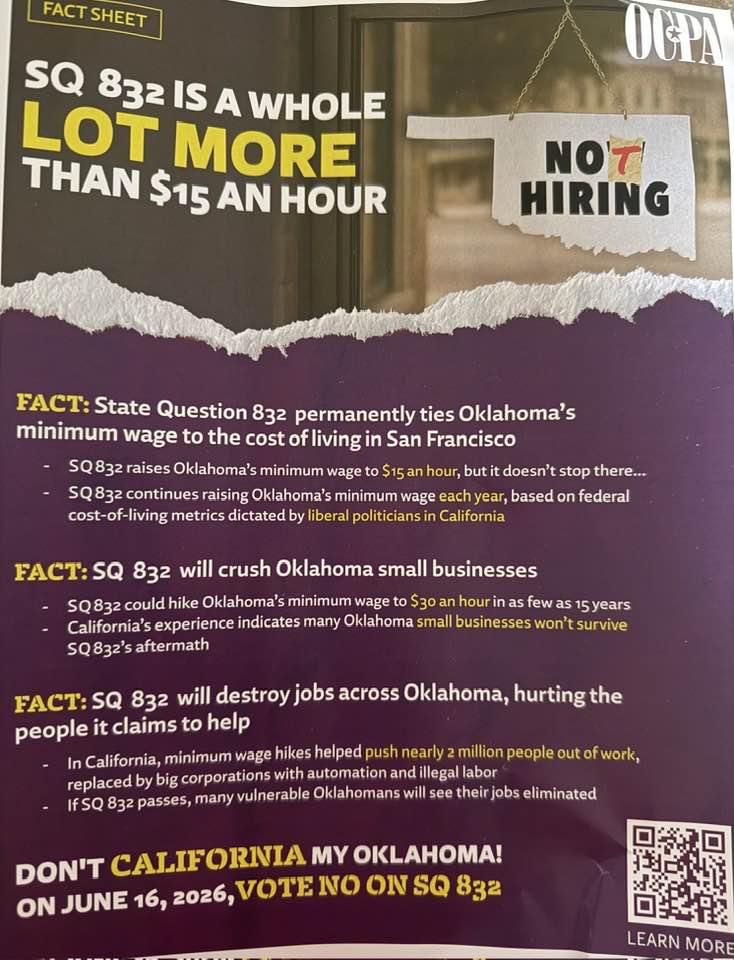
SQ 832 links future wage increases to the Consumer Price Index. Opponents say this ties Oklahoma’s wage floor to cost‑of‑living trends in high‑cost cities like New York or San Francisco, which may not reflect Oklahoma’s economy.
Projected future wage levels under CPI‑based increases could reach $22–$35/hour within 15 years, depending on inflation trends, raising concerns about long‑term affordability for employers.
Potential unintended consequences for low‑income workers
Some business groups argue that rapid wage increases can lead to:
- Reduced hours
- Fewer available jobs
- Increased automation
They argue these effects may ultimately harm the very workers the policy intends to help.
Showing 1 reaction